
Many men carry unspoken inner tensions — between strength and sensitivity, independence and closeness, responsibility and freedom; archetypal work offers a powerful way to understand these patterns, not as personal failings, but as part of the deeper structure of the psyche…

Working with Archetypes in Men’s Therapy and Circles
Jungian archetypes can have a profound impact on how men experience themselves, their relationships, and their place in the world. Many men carry unspoken inner tensions — between strength and sensitivity, independence and closeness, responsibility and freedom. Archetypal work offers a powerful way to understand these patterns, not as personal failings, but as part of the deeper structure of the psyche.
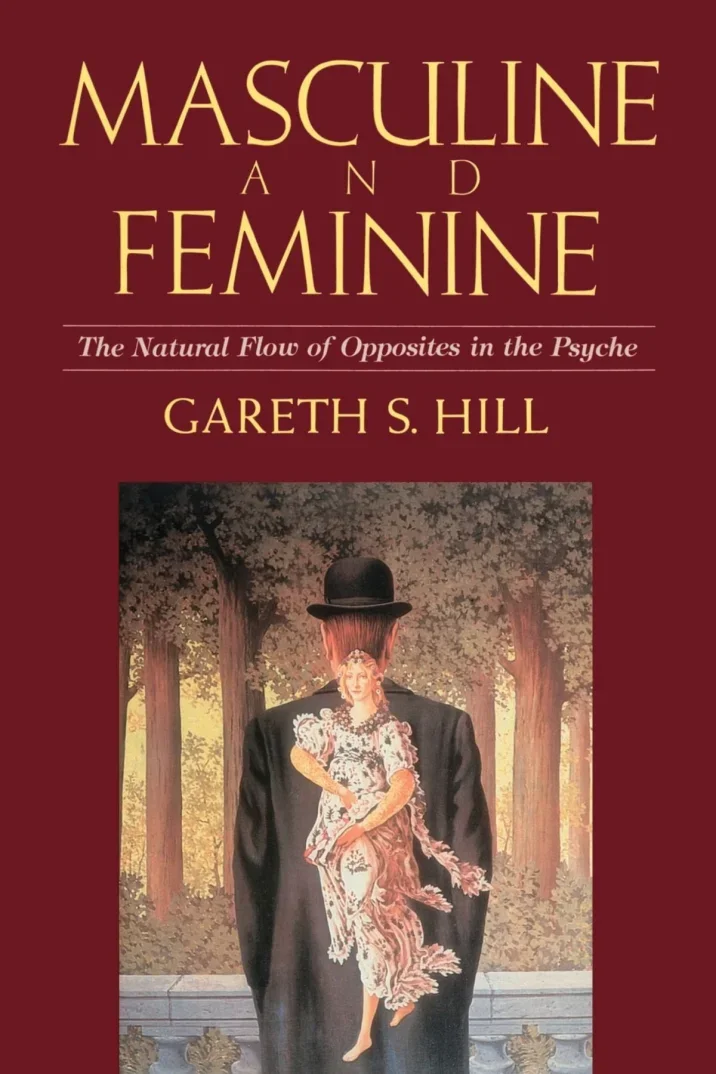
Jungian analyst Gareth S. Hill suggested that there are four core patterns of masculine and feminine energy that shape the natural flow of opposites within us. These are not about gender roles, but psychological qualities that exist in all people.
In brief:
• Static Feminine relates to safety, belonging, emotional holding
• Dynamic Masculine brings initiative, agency, differentiation
• Static Masculine offers structure, boundaries, responsibility
• Dynamic Feminine invites imagination, play, transformation
In their healthy form, these energies support growth and balance. But when trauma or early experience impacts development, these patterns can become distorted. Many men find themselves stuck — emotionally shut down, overly driven, disconnected, or unsure of who they really are beneath the roles they perform.
Boarding School Survival and the Strategic Self
This is especially relevant for men who experienced early separation or institutional life. Boarding school survival describes the adaptations children make to cope with broken attachment, vulnerability, and enforced independence. Often a “strategic survival personality” develops — self-sufficient, emotionally contained, outwardly capable.
While this survival mode may work in school or professional life, it can lead to longer-term difficulties: relationship struggles, workaholism, loneliness, or a sense of emotional distance from oneself and others.
Why Men’s Circles Can Be Transformative
Individual therapy can be deeply healing, but group work can also be uniquely powerful for men. There is something transformative about being vulnerable and open-hearted in the presence of other men — being witnessed without judgement, sharing honestly, and discovering you are not alone.
Modern man has often lost spaces for healthy masculinity, friendship, and emotional connection. Men’s circles offer an antidote to isolation: a supportive community where personal growth and wellbeing can be fostered in a safe, grounded environment.
In the Twickenham Men’s Circle, I bring knowledge of male psychology, embodied practices, and archetypal themes as anchor points. This includes working with the masculine and feminine within, and exploring shadow patterns through archetypes such as the King, Warrior, Lover, and Magician.
Open and Closed Circles
I offer two types of men’s circles:
• Open circles, ideal for men who are new to group work and want to test the water in a supportive, non-judgmental space.
• Closed circles, for men who feel ready to commit to a deeper programme of change over 12 weeks, exploring themes such as family life, school, friendships, love, anger, grief, and joy.
I also facilitate specialist circles for boarding school survivors, where men can explore the long-term impact of early separation and survival adaptations, and experience the nourishment of relational healing.
An Invitation
If any of these themes resonate — feeling stuck, disconnected, overly self-reliant, or longing for deeper connection — you are warmly welcome.
Men’s work is not about fixing yourself. It is about coming home to yourself, in the company of other men, for your own benefit and that of the wider community.
To learn more or join a circle in Twickenham or online, please visit my Workshops page.
________________________________________
Static Feminine — Being, Unity, Wholeness
Static feminine is traditionally represented by The Great Mother, a state of being and wholeness where individuality has not yet fully emerged. This pattern begins in early infancy, where the child experiences a sense of unity and attunement with the caregiver.
In adult life, this energy may be felt as the desire for belonging, safety, emotional holding, or deep connection. At its best, it offers comfort and nourishment. However, its negative expression is represented by The Devouring Mother, which can lead to emotional entanglement, dependency, or difficulty taking responsibility for oneself.
In psychotherapy, this pattern may emerge when someone struggles with boundaries, fears separation, or feels pulled into relationships where individuality becomes lost.
________________________________________
Dynamic Masculine — Differentiation, Initiative, Drive
Dynamic masculine thrusts out of the static feminine like the archetype of the Dragon-Slaying Hero, characterised by initiative, courage, and the drive toward differentiation.
This pattern often reaches its height in young adulthood, when there is a strong need to explore, discover, and break away into authenticity. In its healthy form, dynamic masculine supports independence, confidence, and the capacity to stand alone.
Its negative aspect can be seen in the archetype of the Despot — inflated ego, violence, risk-taking, or disregard for others and the natural world.
In therapy, this pattern may show up in struggles around ambition, control, anger, or an intense need to prove oneself.
________________________________________
Static Masculine — Order, Meaning, Responsibility
Static masculine carries forward the linear progression of dynamic masculine into structure, stability, and social meaning. This is represented by The Great Father, associated with rules, responsibility, and integration.
Often connected with midlife development, this pattern relates to building a life through home, work, family, and commitment. At its best, it offers groundedness, purpose, and ethical structure.
However, its negative expression may become rigid, dehumanising, or inauthentic — much like the archetype of the Saturnine Senex, where order becomes restriction.
In psychotherapy, this may appear as perfectionism, emotional suppression, over-identification with duty, or difficulty adapting to change.
________________________________________
Dynamic Feminine — Imagination, Play, Transformation
Dynamic feminine completes the four patterns through imagination, inspiration, and fluid transformation. Habit and order are replaced by yielding flow and creative disruption.
This energy is embodied in figures such as Dionysus or the Trickster, and often becomes more prominent in later middle age, when ego identity may loosen and deeper individuation begins.
In its positive form, dynamic feminine supports creativity, renewal, and openness to the unknown. Its negative aspect may be expressed through chaos, despair, intoxication, or disorientation — the archetype of the Madman or Madwoman.
In therapy, this pattern may be present during major life transitions, periods of uncertainty, or when a person feels called toward change but fears losing stability.
________________________________________
Psychotherapy and the Flow of the Four Patterns
One of the strengths of Hill’s theory is that these patterns are not fixed stages, but part of an ongoing ebb and flow throughout life. We may move through mini cycles of development, revisit earlier dynamics, or return to particular patterns when new experiences invite healing.
In psychotherapy, exploring these archetypal energies can help illuminate where someone may feel stuck — for example, overly merged, overly driven, rigidly controlled, or emotionally ungrounded. This work can support a deeper understanding of inner conflict, relationship patterns, and the lifelong process of becoming more whole.
Hill also intended his model to be integrative, moving beyond some of the limitations of Jung’s earlier formulations. The archetypes link well with the soul qualities of the Elements Model, and there are resonances with developmental theories such as Mahler’s separation–individuation stages, which I will write more about in time.
________________________________________
Supporting Integration and Wholeness
Rather than placing labels, Hill’s framework offers a symbolic way of understanding the energies that shape our inner lives. In psychotherapy, these patterns can be explored gently and meaningfully, supporting greater balance, emotional depth, and integration over time.
If you recognise any of these themes in your own life or relationships, therapy can offer a supportive space to explore them at your own pace. Together, we can reflect on these patterns and work towards a deeper sense of connection, authenticity, and wholeness.